More than Mossy Rocks
A look into Oregon's fragile Abalone population


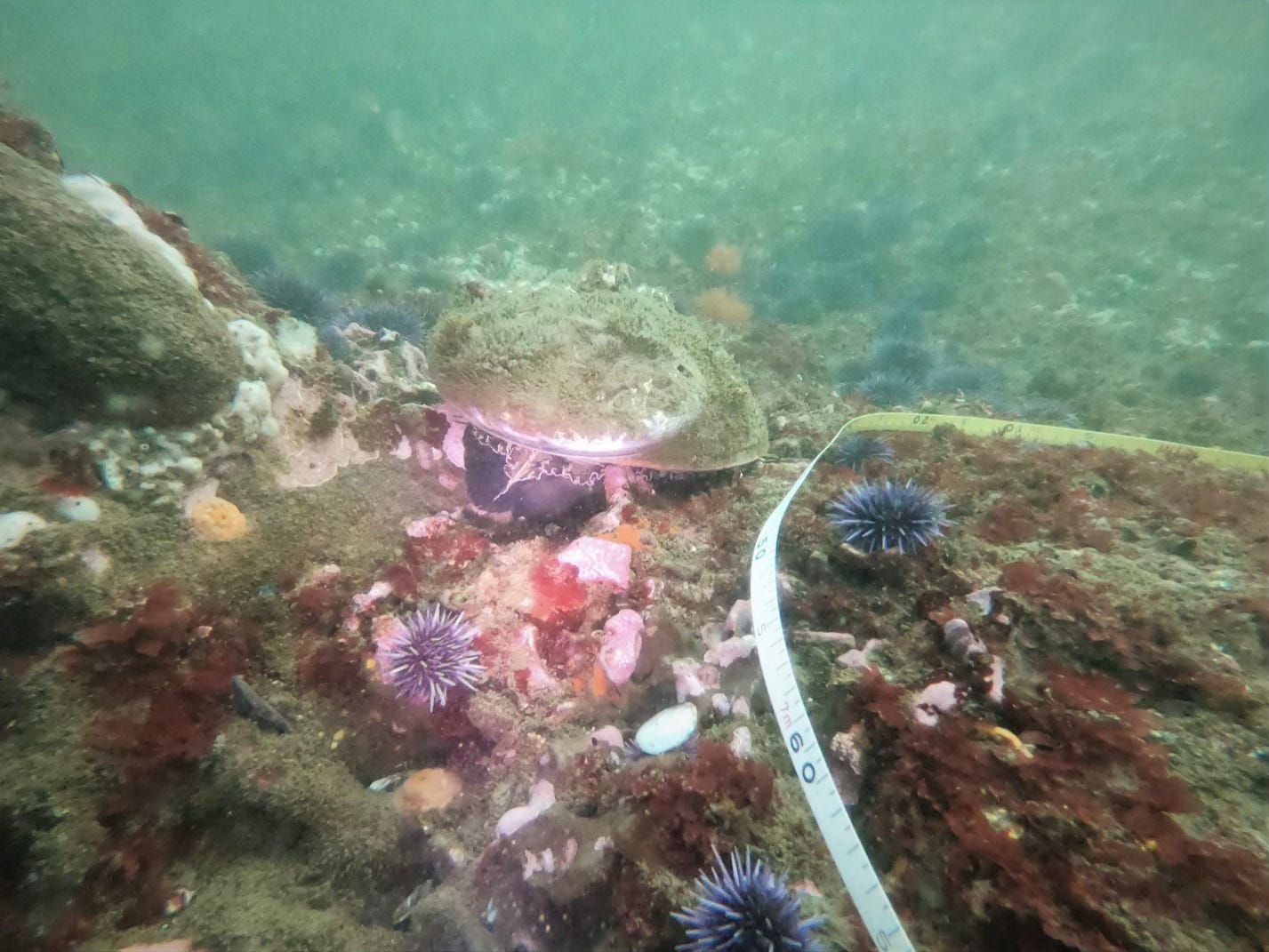
Diving in a cove off the Oregon coast, my eye is drawn to a mossy rock, one of the many such rocks scattered along the rocky reef seafloor. But this rock is nearly a perfect oval…suspiciously so. Coming closer, I see the rock is lifted slightly off the seafloor, with a frilly skirt emerging from the space underneath the rock, and two silly little antennae peaking off of one side. My favorite underwater animal. The abalone.
Abalone are marine snails that live in coastal waters and graze algae. While they may just look like mossy rocks slowly scooting along the seafloor, they are fascinating creatures. Although often the top side of their shell is a bit drab, the underside of their shell has a swirling mother-of-pearl iridescent shine, known as nacre. The beauty of their shells has captured human imagination into the misty past. The shells were used culturally, spiritually, and for decoration by many Indigenous peoples of the North American West Coast. Abalone shells were so highly valued as trade objects that they can be used to trace ancient trade routes, with their shells ending up as far inland as Chaco Canyon in the southwest.
In addition to their shells, their meat has been a prized food source by both Indigenous peoples and settler colonialists along the West Coast. In fact, culinary demand for abalone helped drive extensive overfishing of the West Coast’s diverse abalone species in the 19th and 20th centuries, leaving several species such as the white abalone in real danger of extinction. If you’d like to learn more about the fascinating cultural and environmental history of abalone, I’d recommend Ann Vileisis’ excellent book Abalone.
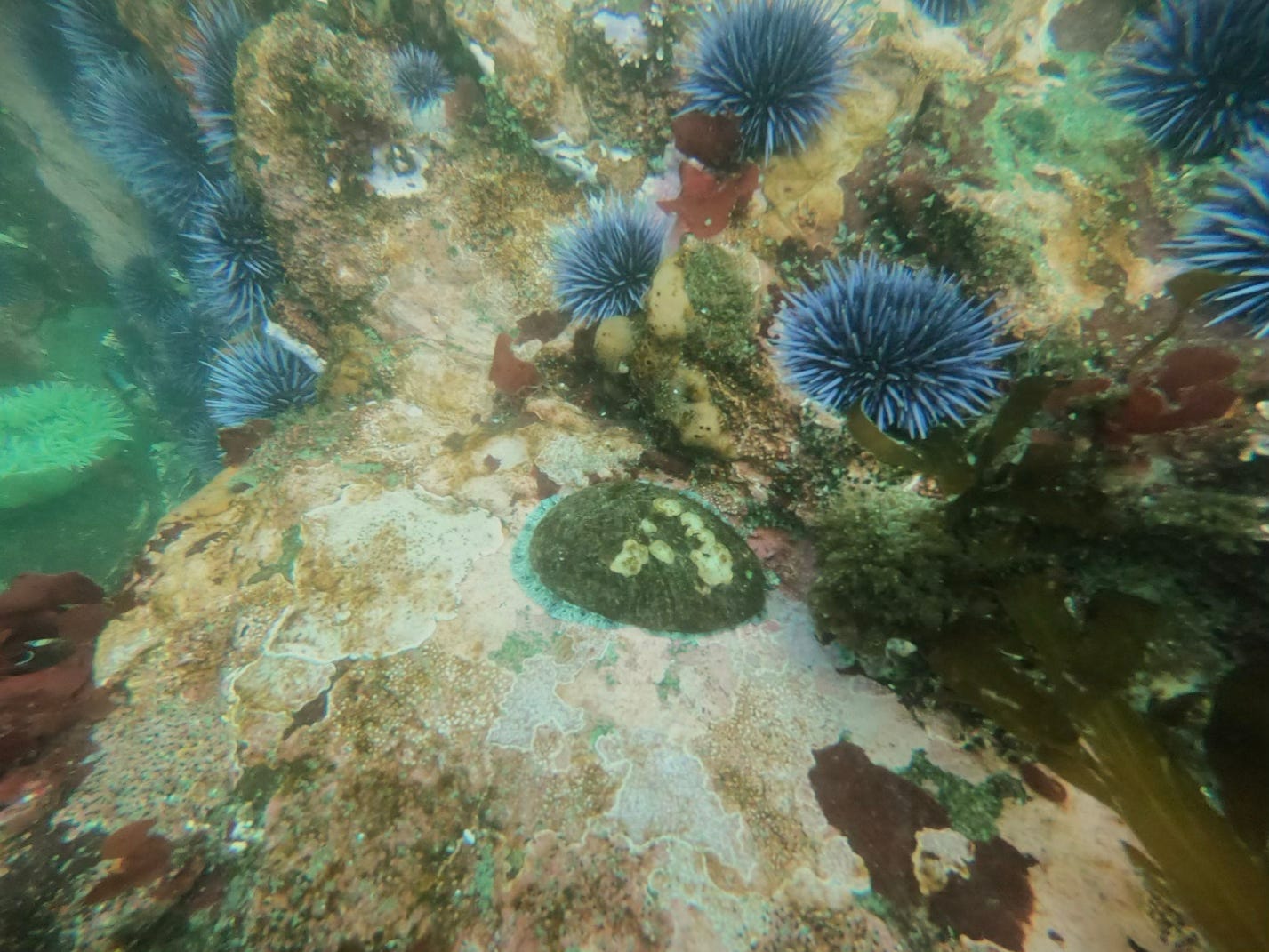
Here in Oregon, we have three abalone species: red abalone, pinto abalone, and flat abalone. Red abalone are the largest abalone species in the world, growing to be the size of a football. All three species are listed as ‘Species of Greatest Concern’ on ODFW’s State Wildlife Action Plan due to declining populations. ODFW identifies loss of kelp forest habitat as a key driver of declining abalone populations in Oregon as kelp and other algae underpins the abalone diet [1]. In fact, ODFW’s own Scott Groth co-authored a recent paper that found evidence that flat abalone are at risk of extinction [2].
The fate of Oregon’s imperiled abalone has always driven a sense of urgency behind my work at ORKA. I know that meaningful habitat restoration and conservation generally require many years of focused, well-resourced work. But when you’re staring down the literal extinction of a species, being asked to wait 1, 2, 5, 10 years for funding or permits or more data to be collected can be heartbreaking.
But this year? Anecdotally, we’re hearing of more observations of abalone at sites where kelp is beginning to recover, including from commercial urchin divers. While we’ll need to confirm these observations at the end of the field season with SCUBA data taken at both restoration and control sites, this could be an early sign that kelp restoration can have positive impacts on abalone at local scales. Restoring kelp isn’t just about the kelp, it’s about the beautiful, interconnected web of life that springs forth from the kelp forest as a larger whole. And the humble abalone is the ultimate symbol of that large whole.
1. Smith, K. R., S. D. Groth, and S. S. Rumrill. 2023. Conservation and Fishery Management Plan for Red Abalone in Oregon. Oregon Department of Fish and Wildlife.
2. Rogers-Bennett, L., S. D. Groth, and J. T. Carlton. 2024. Steep Decline in the Rare Flat Abalone, Haliotis walallensis, Following Fishing Exploitation and a Marine Heat Wave: The Next Neoextinction? Integrative And Comparative Biology:126.
 | A guest post by
|